


Skin Restoration: The Science and Art behind Cover-ups and Scar Tattooing
There are moments when tattooing transcends the decorative sphere and becomes a tool for restoration—regaining confidence and rewriting a personal story. At TART Tattoo Collective, we approach special technical cases, such as complex cover-ups and scar tattooing, not as mere camouflage tasks, but as aesthetic reconstruction projects that demand absolute technical rigor.
Many commercial studios reject these projects due to the risks involved or a lack of experience in managing traumatized tissue. In this extensive article, we explain why artistic integrity and a biological understanding of the skin are fundamental to the success of such an intervention.
1. Scar Tattooing: More Than Coverage, an Anatomical Integration
Scars—whether from surgery, burns, or accidents—represent a tissue that differs significantly from healthy skin. It is denser, less vascularized, and reacts unpredictably to pigment deposition. At TART Tattoo, we are realists: not all scars can be tattooed, and the decision is always made following an in-depth consultation.
The Maturity Criterion: An ironclad rule in our studio is that the tissue must be fully healed and matured. This process usually takes between 12 to 24 months. A scar that is still pink or purplish is a sign that the dermal remodeling process is active; tattooing during this phase can lead to pigment migration or scar hypertrophy.
Technique and Approach: We utilize the 3RL whipshading technique to work with minimal pressure. This method allows us to “build” texture and color without further traumatizing an already fragile tissue. The goal is not always the total disappearance of the scar, but its integration into a custom composition that uses its organic shapes to create depth and character.
2. The Logic of Complex Cover-ups: Why “Painting Over” Doesn’t Work
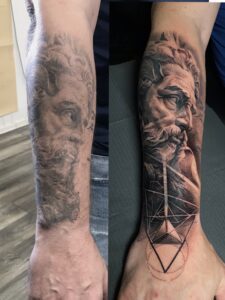
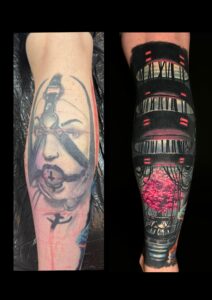
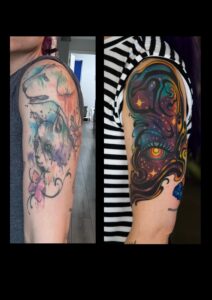
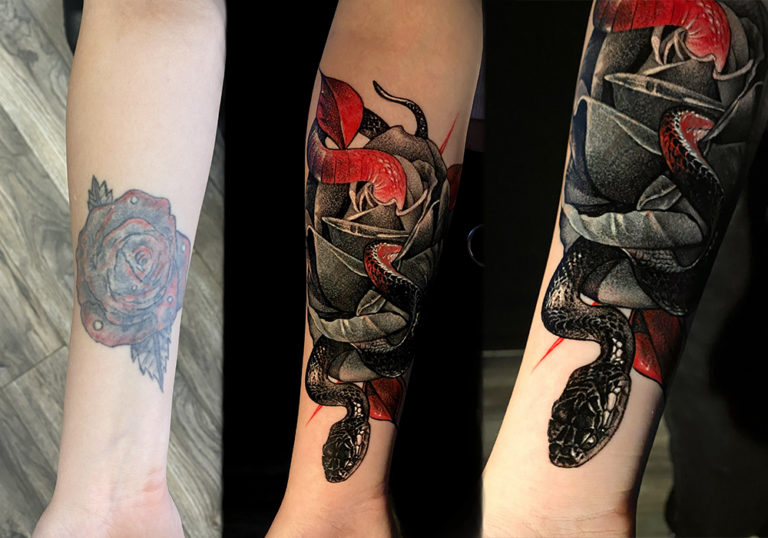
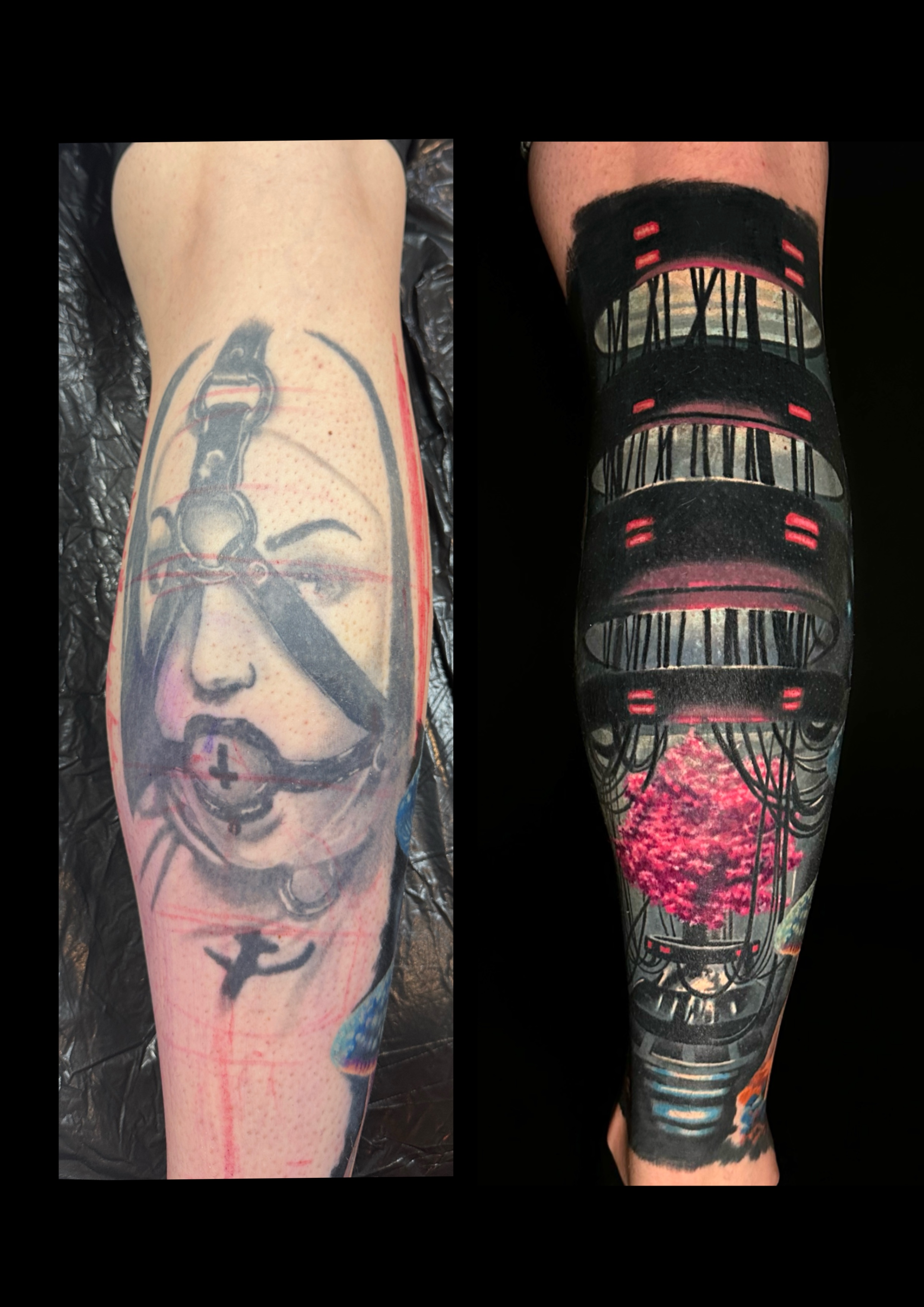
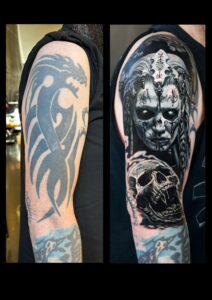
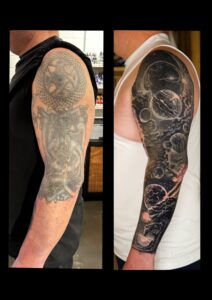
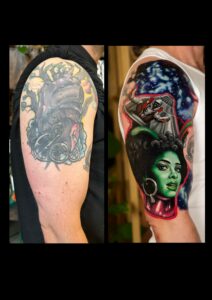
A common misconception regarding cover-ups is the idea that a new tattoo acts like opaque paint over the old one. In reality, tattoo ink is transparent, and the new pigment blends optically with the existing one in the dermis.
At TART Tattoo, complex cover-up projects follow a visual logic based on contrast and strategic placement:
- Saturation and Value: To cover an old design, we don’t necessarily need “more black,” but smarter contrast. We use areas of maximum detail (achieved through 3RL) to distract the eye from the underlying old shapes.
- Anatomical Flow: A successful cover-up must be tailored specifically to your body. Often, we must extend the design well beyond the area of the old tattoo to create a new visual dynamic that makes the old piece invisible to the untrained eye.
- Design Limitations: We do not copy references, and we do not promise that any model can cover any tattoo. We are honest about the styles that work (often black & grey realism or complex ornamental compositions) and those that will never provide effective coverage.
3. The Importance of Materials: REACH 2022 Pigments and Healing
In the case of already traumatized skin, the quality of materials becomes critical. We exclusively use REACH 2022 compliant pigments, which minimize the risk of inflammatory reactions in areas with poor peripheral circulation (such as scars). Proper healing in such projects is closely monitored, and post-procedure instructions are adapted to the specifics of each case.
4. Expectation Management and Professional Honesty
We are not a studio that sells illusions. Tattooing a scar or performing a cover-up involves variables that no technology can 100% control.
- Number of Sessions: We cannot guarantee a fixed number of sessions. Pigment may be rejected more easily by scarred tissue, often requiring follow-up sessions to achieve the desired saturation.
- Pain Perception: Scars can be either hypersensitive or lacking in sensation. The process requires patience from both the artist and the client.
- Aesthetic Integrity: If we believe a project will look worse after tattooing or that the medical risks are too high, we will decline the execution. Our professional integrity takes precedence over any commercial aspect.
5. TART Tattoo Collective’s Expertise in Restoration
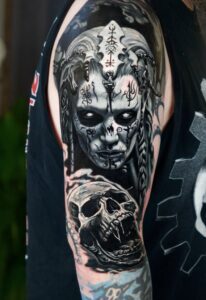
Our team, led by Lucian Tatar, has a cumulative experience of over 20 years, including international awards that attest to our technical precision. Our workshops dedicated to the 3RL technique have trained artists in managing fine detail, which is essential for camouflaging dermal imperfections without creating “heavy” or unsightly textures.
Conclusion: A cover-up or a scar tattoo is not just a procedure; it is a collaborative process based on trust and expertise. If you have a project that others have deemed impossible, we invite you to a consultation to analyze—with pragmatism and respect for anatomy—the real restoration solutions.
Request a consultation for a special technical case.