


Complete guide and real experiences
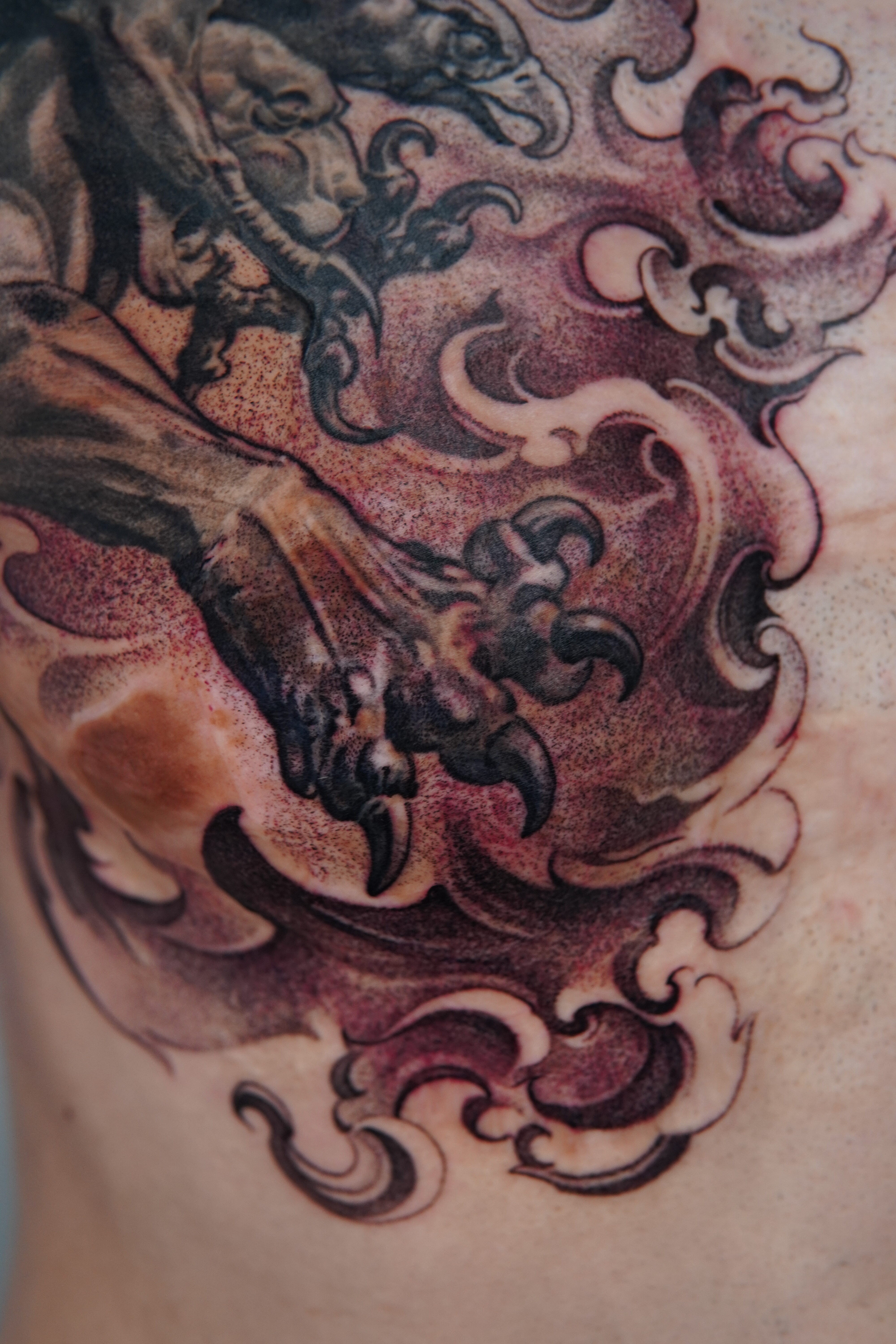
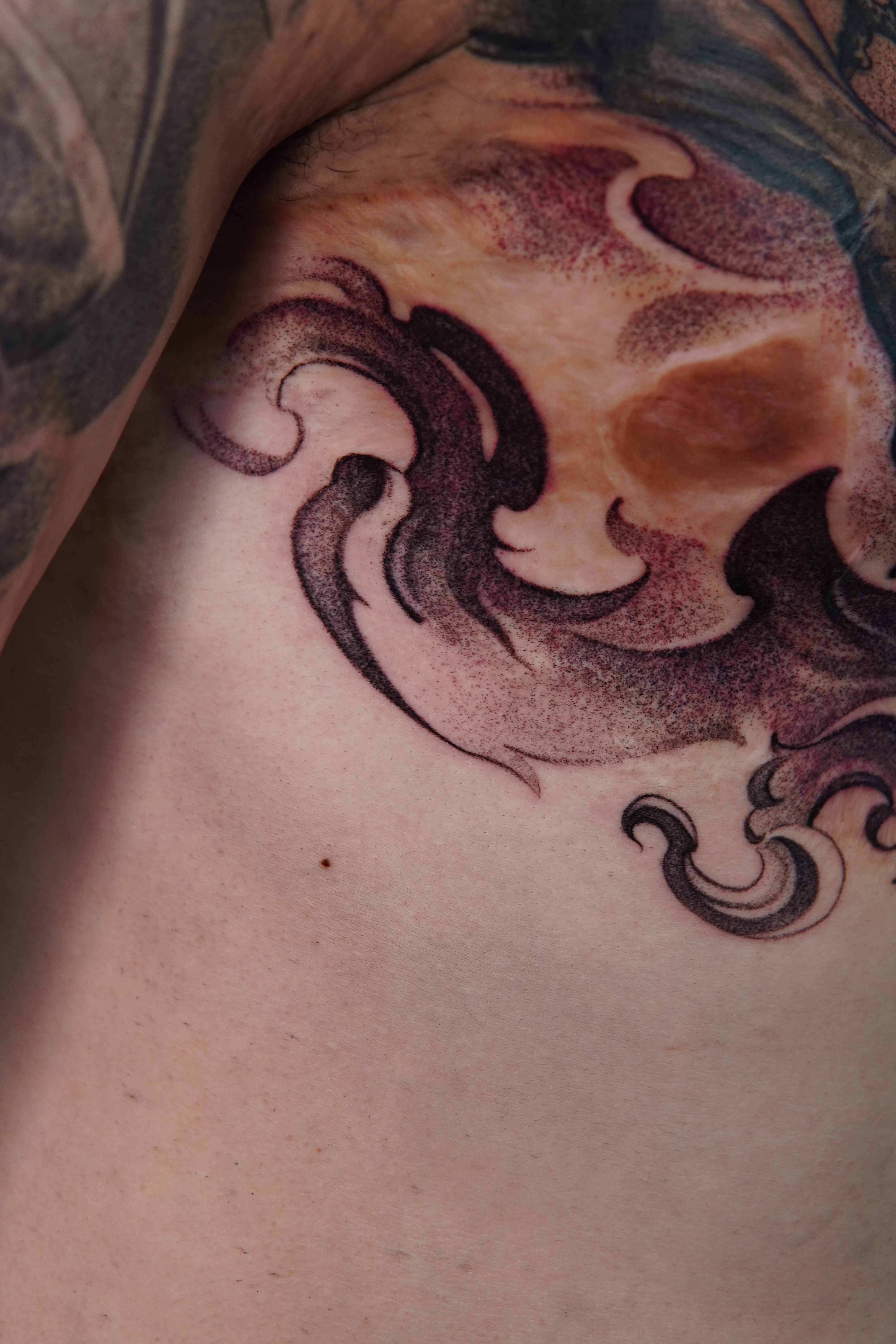
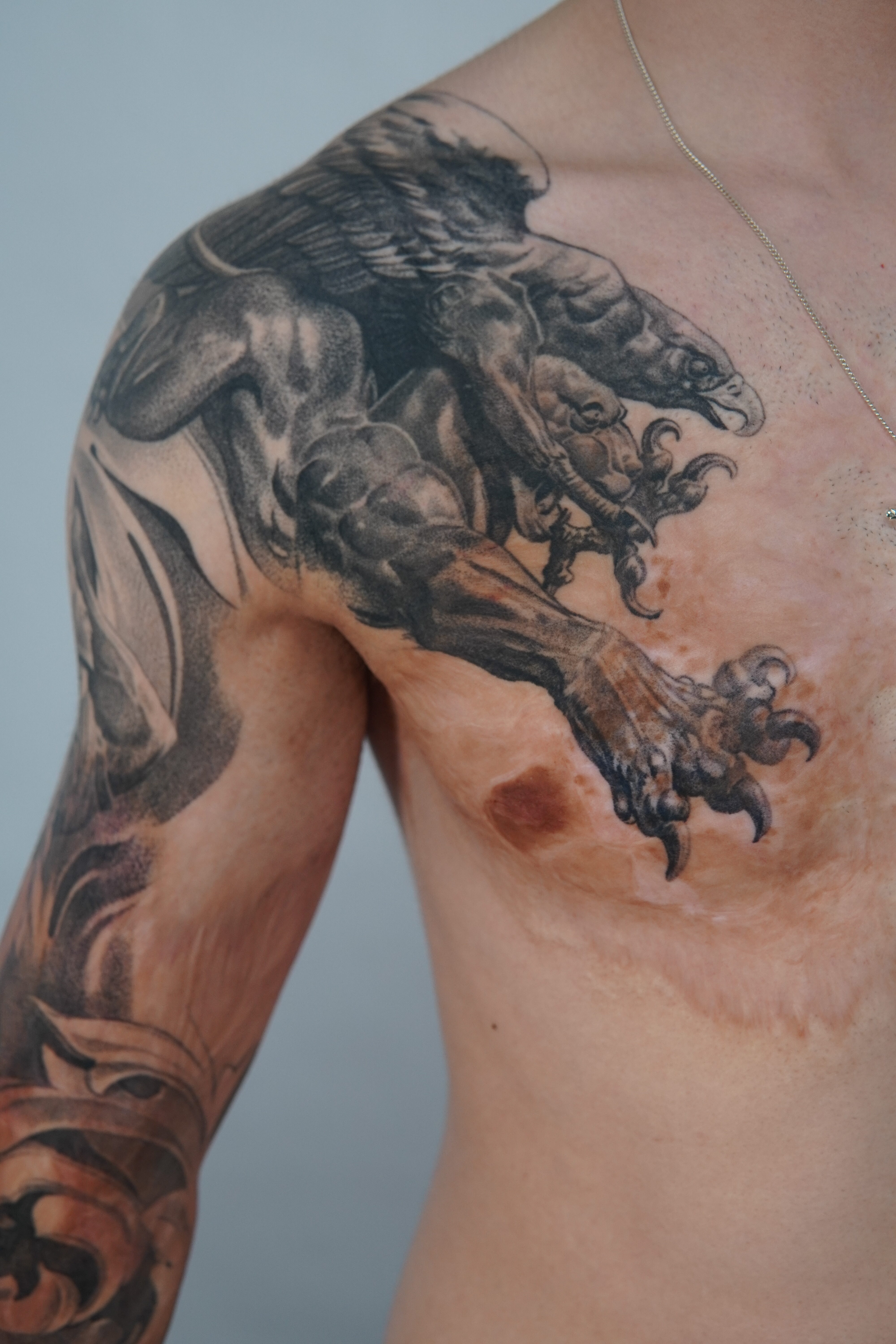
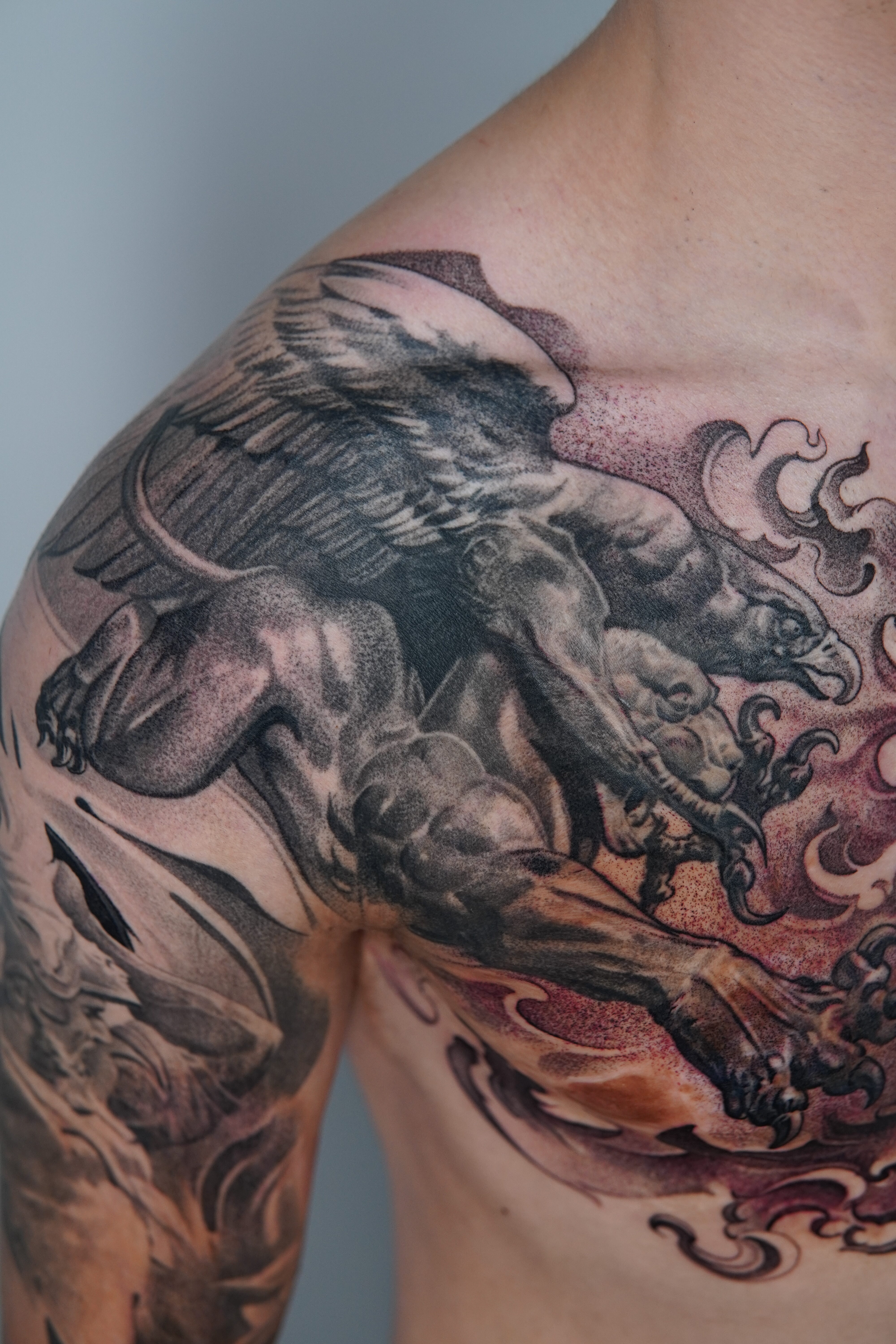
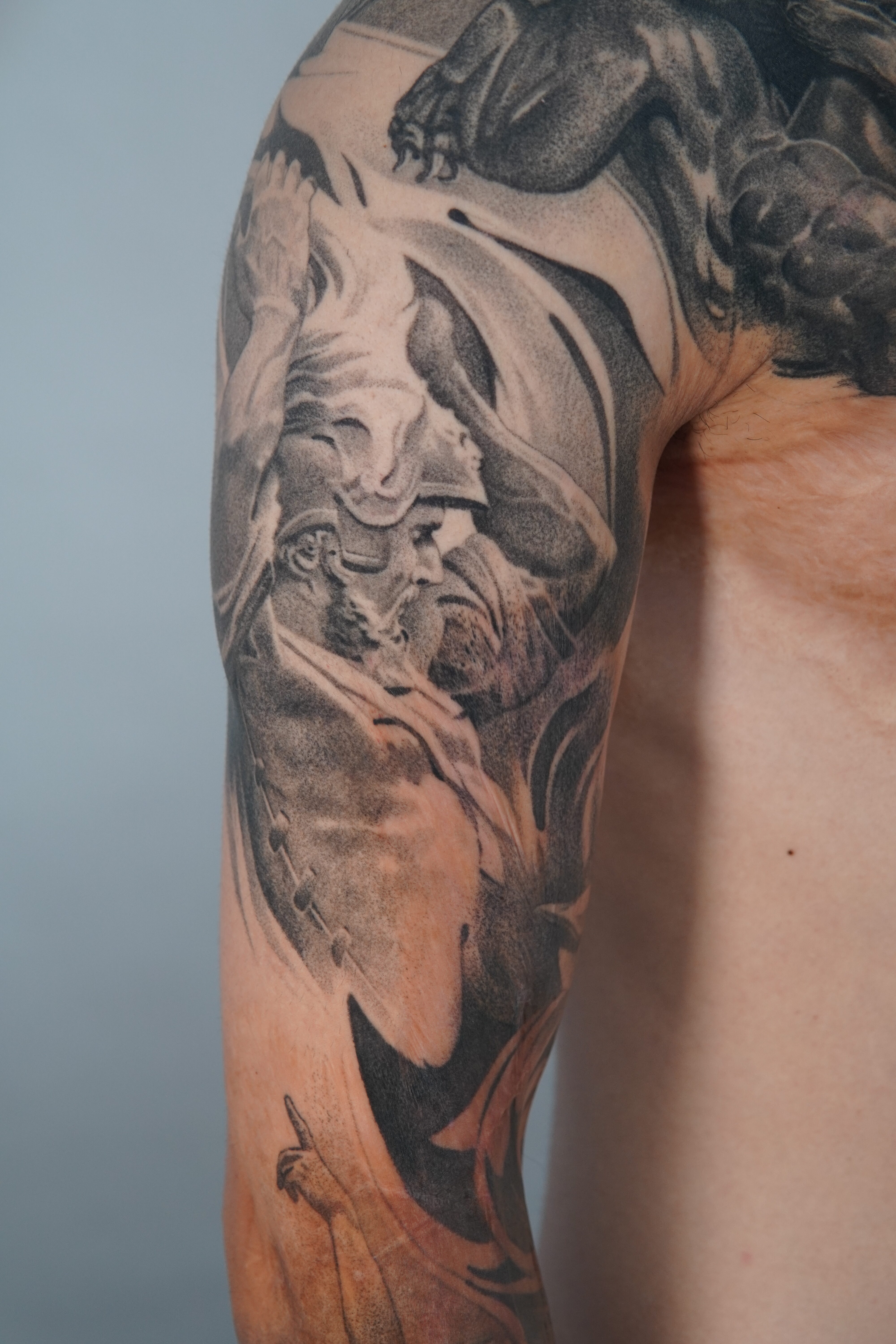
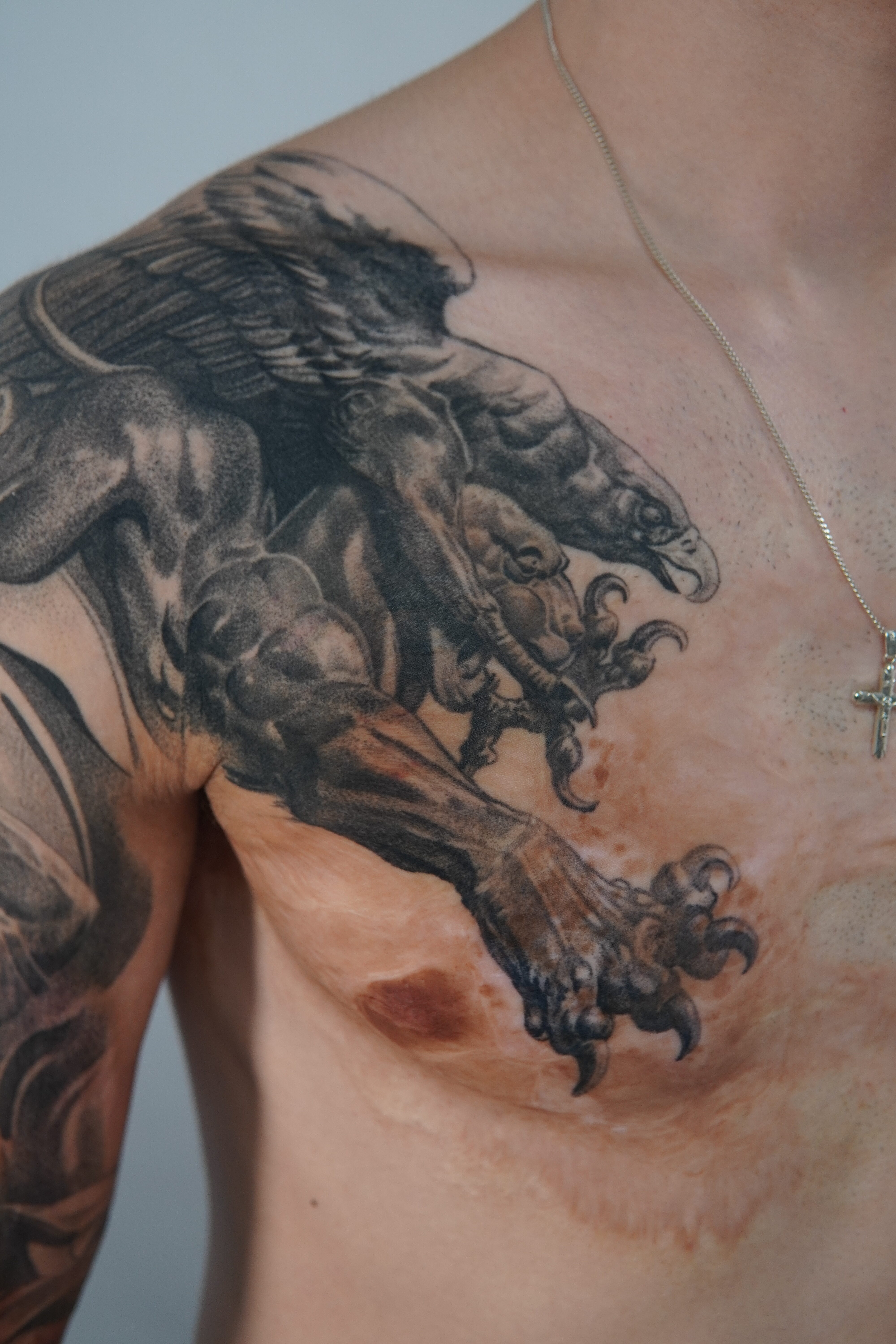
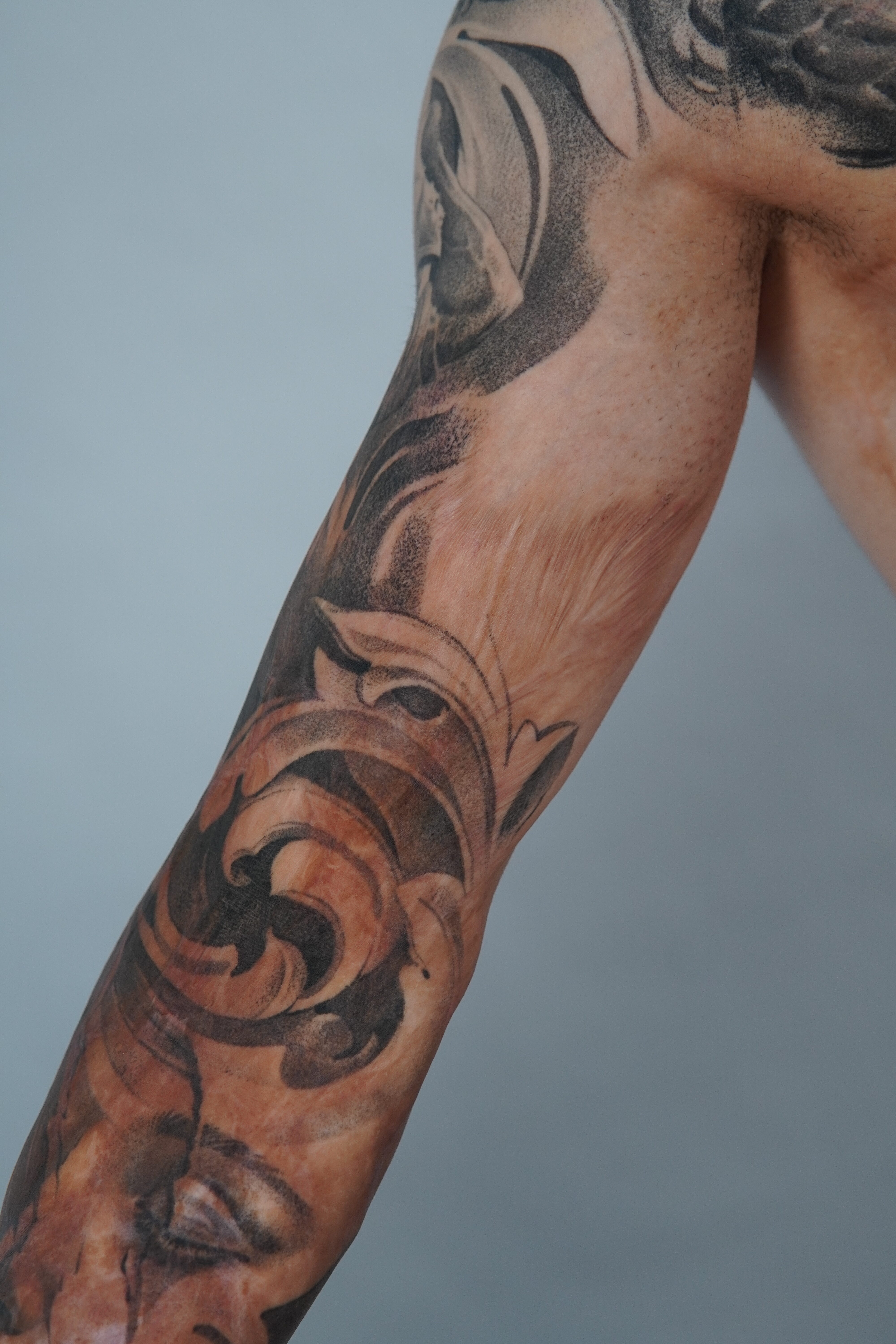
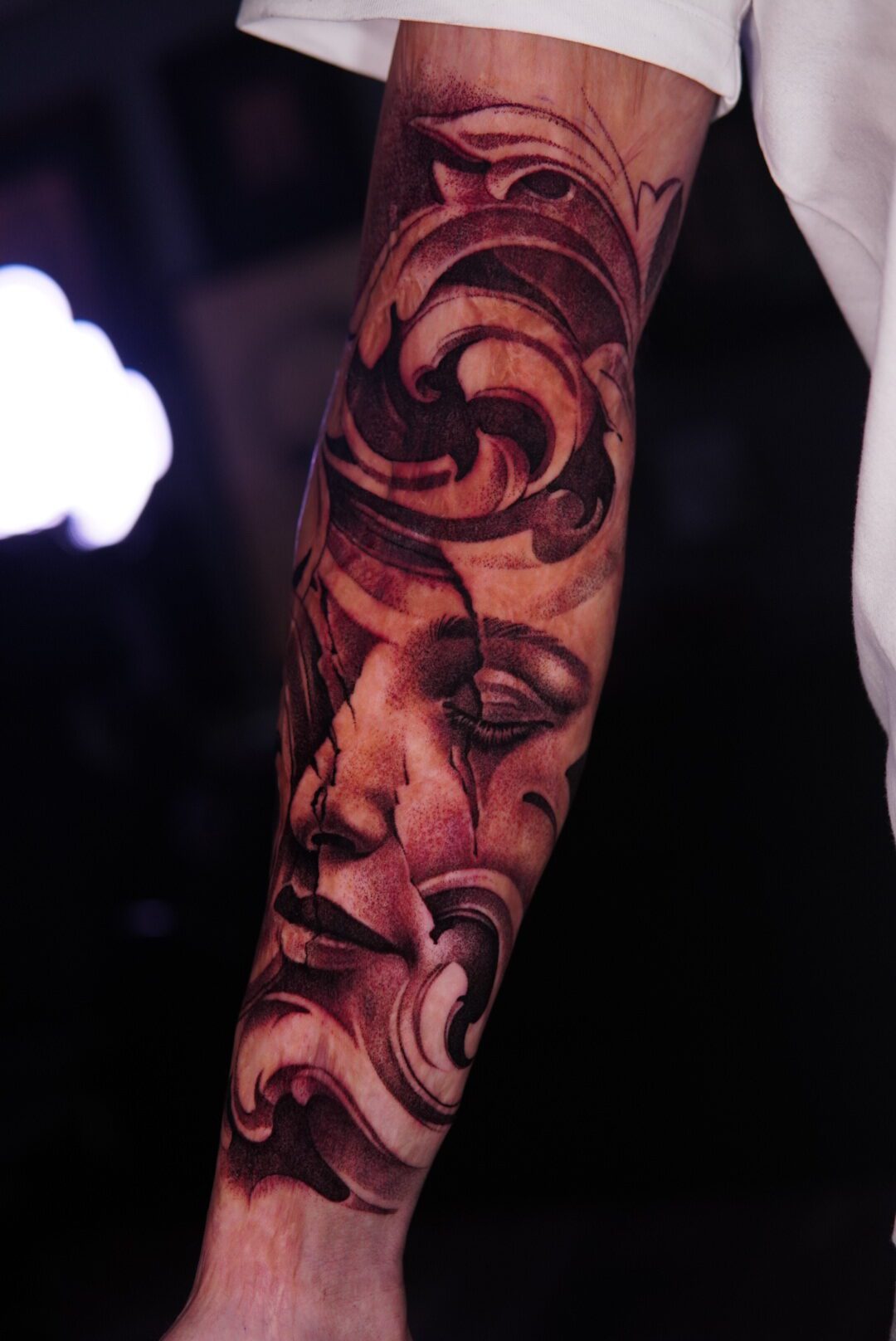
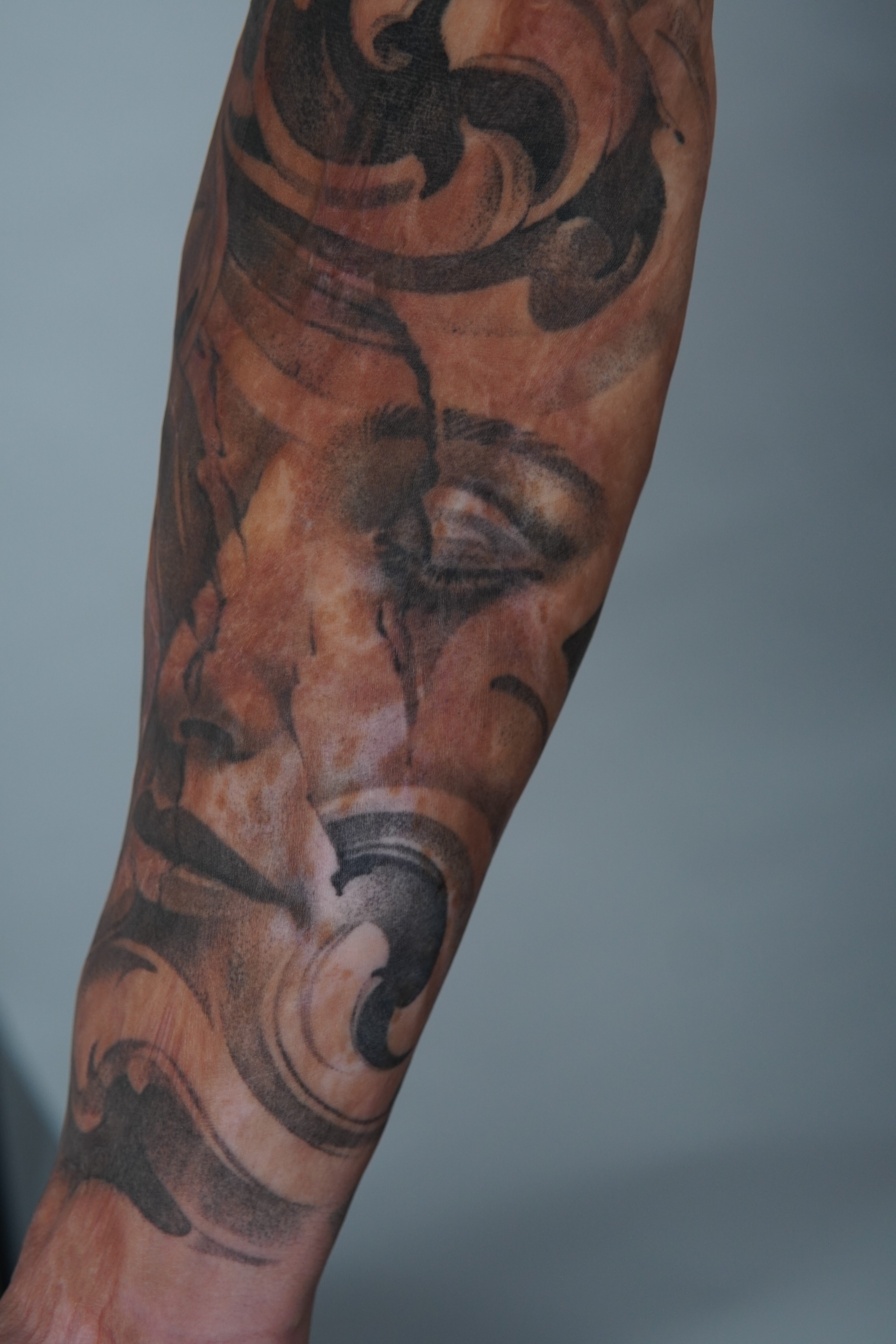
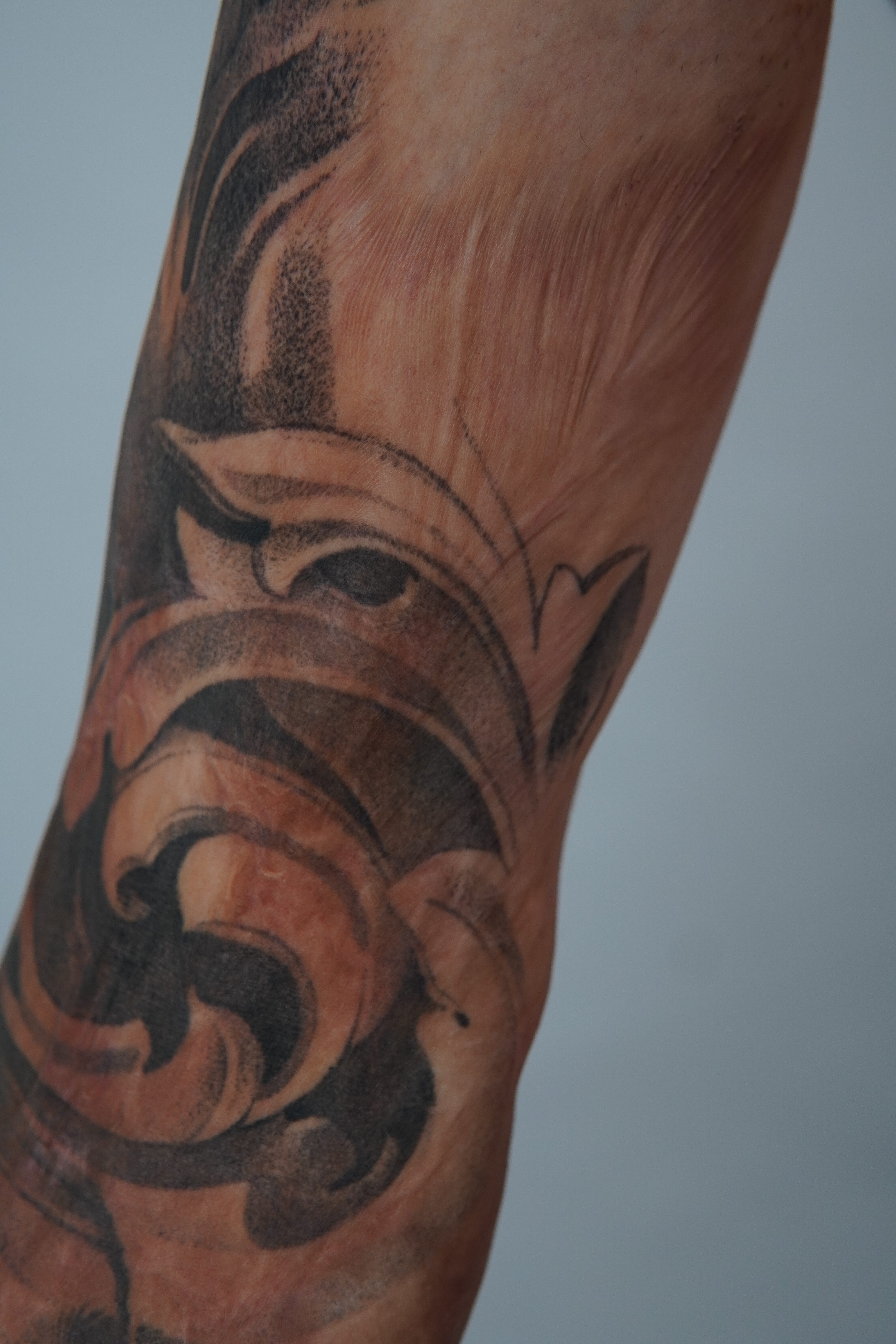
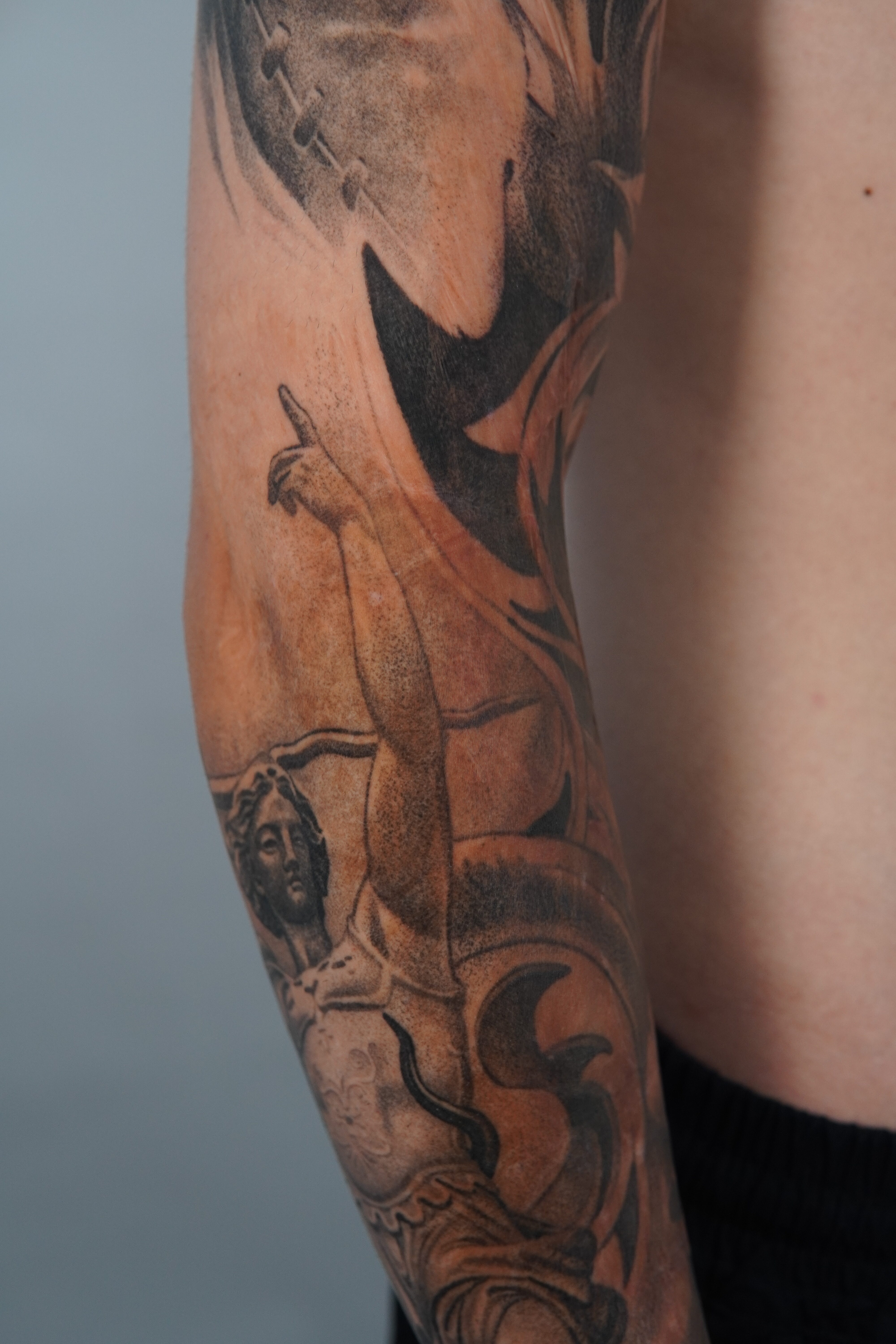
Every tattoo tells a story — but when the canvas is scarred skin, the story becomes deeper. I had the privilege of working with a client who had experienced severe burns as a child. His right inner arm and chest are covered in scars that range from first-degree to third-degree burns. Also there are areas with scars left from all the surgery interventions he had gone through his life growing up.
Tattooing this kind of skin is not easy. Scarred tissue, especially from burns, heals in unpredictable ways and behaves very differently under the needle. But with the right technique, patience, and respect for the damaged skin, it’s not only possible — it can be transformative and I received full trust from my client to start the tattooing process.
What Happens to Skin After a Burn?
To understand tattooing on burn scars, we first need to understand what happens to skin after a burn injury.
Burns are categorized by severity:
- First-degree burns affect only the outer layer of skin (epidermis). They heal without scarring and feel much like sunburn.
- Second-degree burns go deeper, damaging both the epidermis and parts of the dermis. These often result in pigmentation changes and texture irregularities.
- Third-degree burns destroy both the epidermis and dermis entirely, often requiring skin grafts. These areas heal with thick, fibrous scar tissue and are typically less elastic, more fragile, and less vascularized
When the body heals a severe burn, it doesn’t regenerate normal skin — it creates scar tissue. Scar tissue lacks the same structure and blood flow as healthy skin. It may be raised (hypertrophic), tight, shiny, or even numb due to nerve damage. This unique structure affects how it reacts to tattooing.


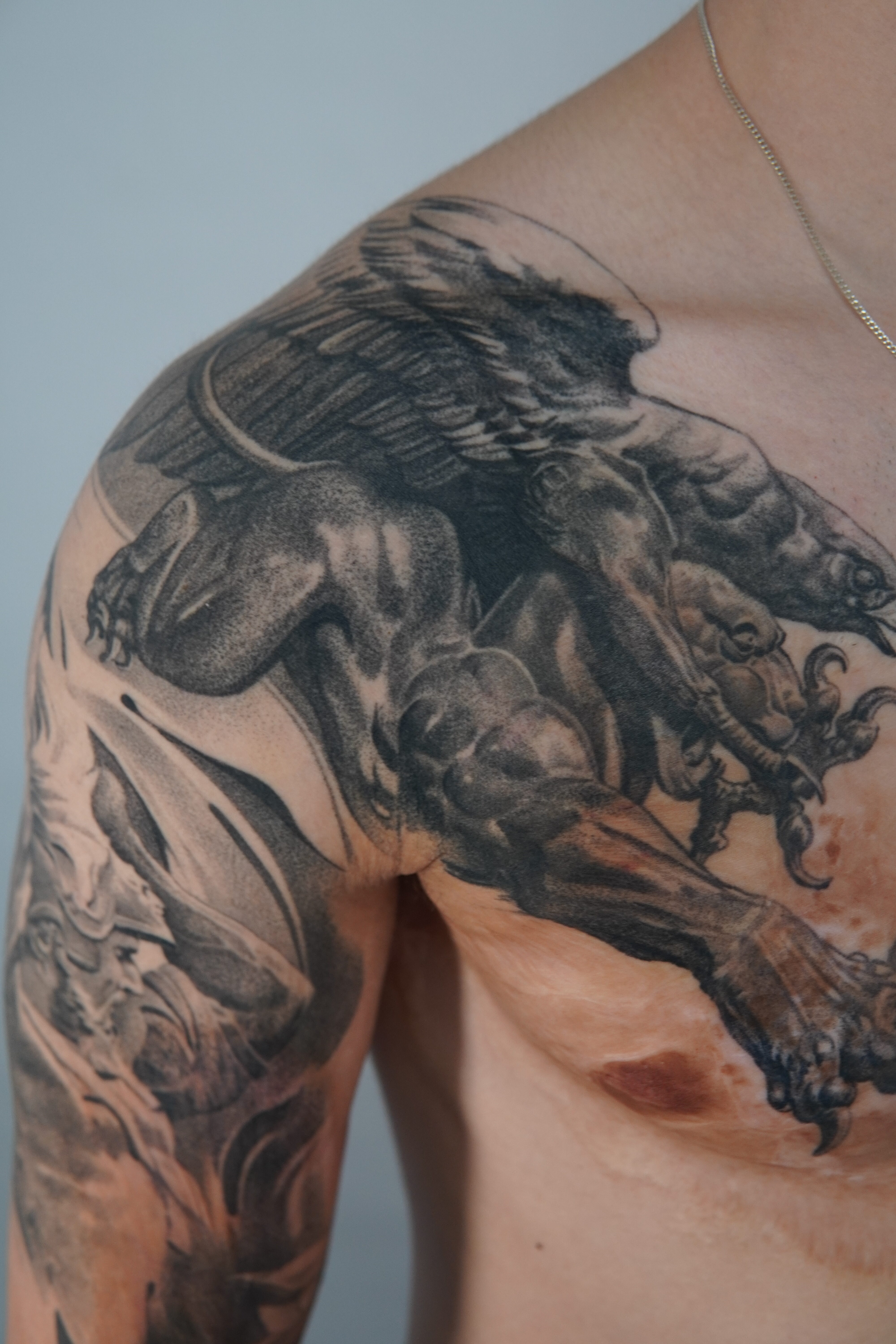
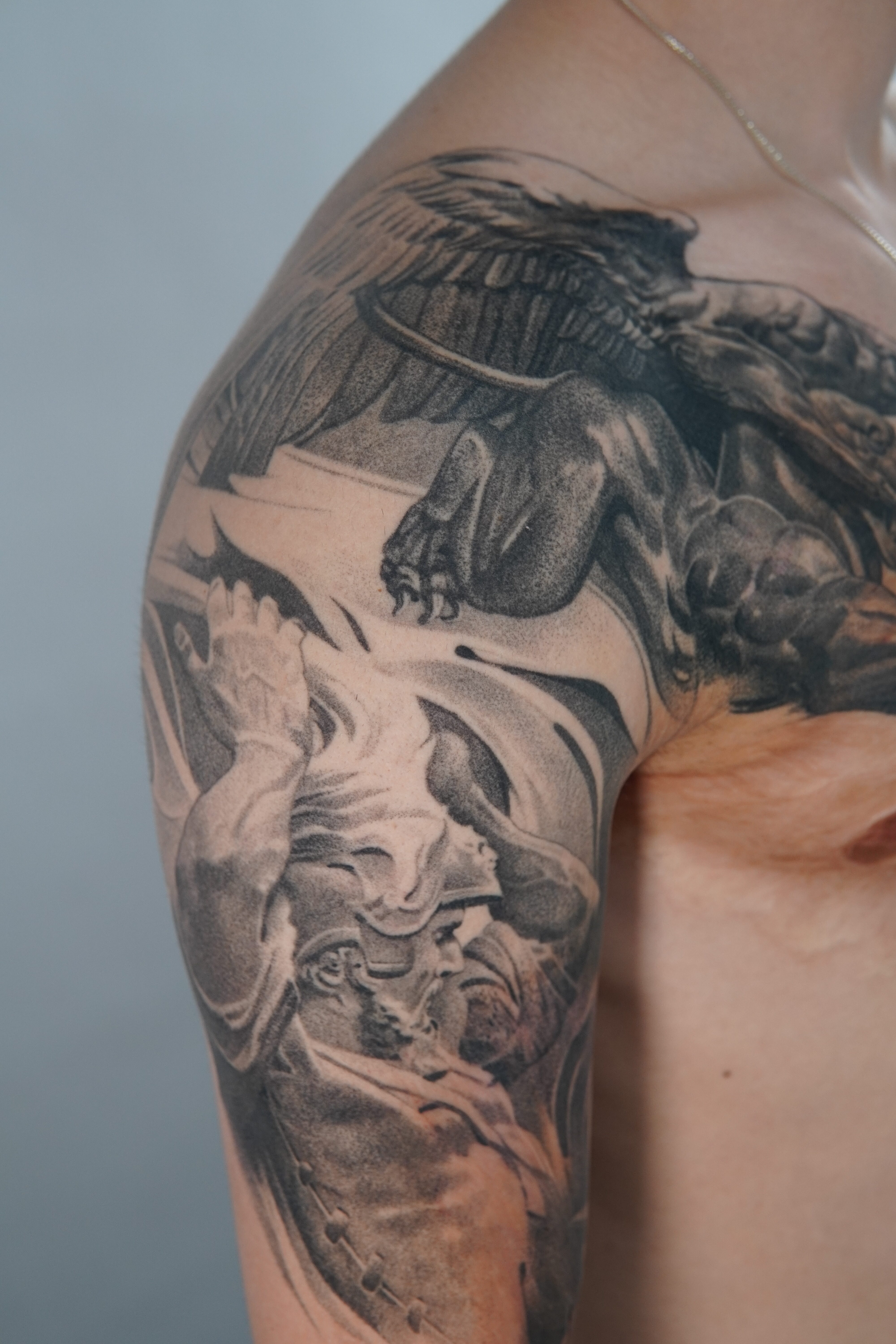
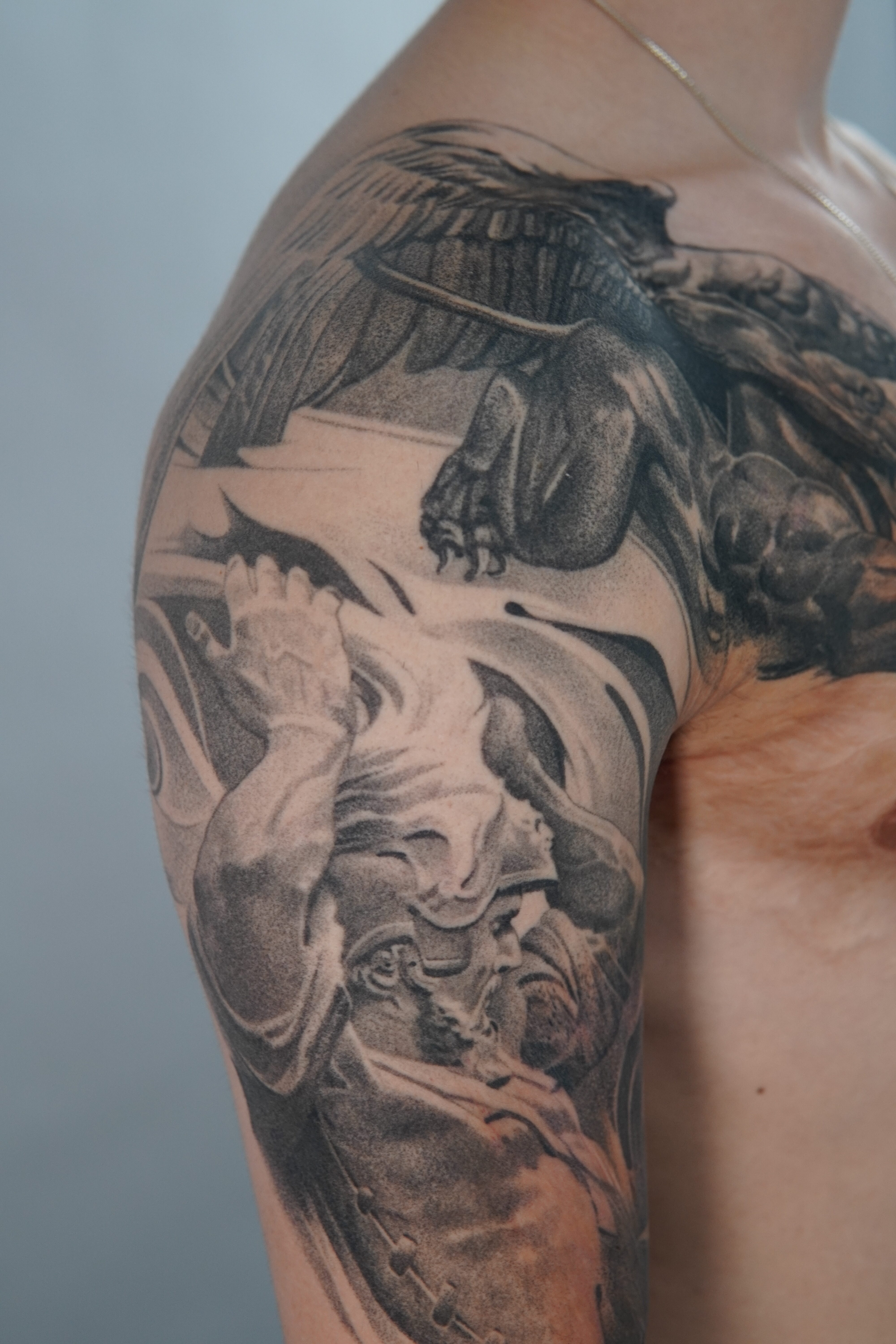
Tattooing Burn Scars: Techniques and Challenges
Tattooing over scar tissue requires a completely different mindset. No two scars are alike, and the approach has to be personalized based on the scar’s age, thickness, location, and type.
Key Challenges and Adaptations:
- Ink Saturation: Scarred skin often doesn’t absorb pigment evenly. In some areas, the ink can fade faster or appear patchy. In others, it may sit longer than expected due to reduced immune activity.
- Machine Settings: I work at a lower voltage and slower speed to minimize trauma. Burned skin is already compromised — it doesn’t need to be overworked.
- Needle Selection: I avoid large or aggressive groupings. Since I only work with 3Round Liner needles, the soft shading techniques give me more control and reduce skin stress.
- Stretching and Hand Pressure: Scar tissue doesn’t stretch like normal skin, and some grafted areas are completely immobile. I rely more on technique and machine control than brute force.
How Tattoos Age on Scarred Skin
All tattoos age — it’s a natural part of the body’s interaction with pigment. The immune system constantly tries to break down and remove tattoo ink, which is why tattoos fade and blur over time.
On scar tissue, however, this process can vary widely:
- Increased Fading: Some scarred areas may fade more rapidly if the skin is thin and exposed or if there’s higher immune activity in the region.
- Slower Breakdown: In areas with thickened or poorly vascularized scar tissue, the ink may last longer simply because the immune system can’t access it as easily.
- Blurring and Migration: Uneven skin texture, lack of elasticity, and irregular dermal layers can cause the ink to spread or blur more quickly.
Ultimately, the longevity of a tattoo over scarred skin is unpredictable — and clients need to be aware of this. Touch-ups may be needed over time, and that’s okay. Tattoos are living art, and they age with the person wearing them.
Longevity of Tattoos on Scarred Skin
It’s important to understand that all tattoos change over time. As tattoo artists, we know that even on healthy skin, ink naturally softens, fades, and blurs slightly as the years go by.
This is a result of both external factors — like sun exposure — and internal processes, primarily the body’s immune system, which is always working to break down and remove foreign particles, including tattoo pigment.
When it comes to scarred skin, especially from burns, this aging process can be even more unpredictable.
- In some areas, especially where the skin is thicker, raised, or less vascular, the ink may fade more quickly or appear uneven over time.
- In other spots, where the scar tissue is thinner or more stable, the pigment might hold longer than expected, since the immune system’s access to that area could be reduced.
- There’s also the possibility of blurring or pigment migration in areas where the skin’s texture is irregular or lacks elasticity.
The truth is: only time will tell how a tattoo will age on scar tissue. No two scars are alike, and no two healed tattoos will look exactly the same years later. That’s why ongoing communication with your client, realistic expectations, and sometimes future touch-ups are all part of the process.
As artists, our goal isn’t perfection — it’s empowerment. It’s giving people a new relationship with their bodies, even if the ink evolves with them over time
The Emotional Side: Healing Through Ink
Tattooing this client wasn’t just about aesthetics — it was about empowerment. He didn’t want to cover the scars completely; he wanted to reclaim them. The transformation wasn’t in “hiding” what had happened, but in taking ownership of it.
Every session, every stroke of the machine, was a step in rewriting his story. The scars are still there — but now they’re framed in art, shaped by choice instead of circumstance.
Advice for Clients with Burn Scars
If you’re considering tattooing over burn scars, here’s what you need to know:
- Wait at least 12–24 months after the injury or surgery, until the scar is fully matured.
- Consult with an experienced artist who understands the complexities of scarred skin.
- Expect multiple sessions and touch-ups, especially for large or deep scars.
- Be open to design flexibility — some areas may not take ink well, and adjustments may be necessary.
For Fellow Tattoo Artists: Respect the Skin
Tattooing scar tissue isn’t about showing off technical skills — it’s about understanding the body and respecting the trauma it has endured. If you’re new to working on scars, educate yourself first. Practice soft hands. Take your time. Communicate openly with your client.
And remember: you’re not just creating a design — you’re participating in someone’s healing.
Final Thoughts
Tattooing over burn scars is one of the most challenging — and meaningful — things I do as an artist. It’s not always predictable, and it’s rarely easy. But when done with care, empathy, and patience, it can give someone back a sense of ownership over their body.
The ink may fade, the lines may blur — but the impact lasts.
Frequently asked questions (FAQ)
- Can any type of burn scar be tattooed?
Most of them, yes, after maturation (12–24 months). Some areas (keloids/rigid grafts) require a patch test/step-by-step approach. - Does it hurt more on scars?
The sensation varies: some scars are hyposensitive, others may be more sensitive. We work slowly, with breaks. - How long does healing take?
Usually longer than on healthy skin. Follow after-care strictly; touch-ups are assessed after 6–12 weeks.

Who is TART Tattoo Studio
TART Tattoo studio is led by Lucian Tătar, an artist with over ten years of experience, recognized for his mastery of the 3RL (3 Round Liner) technique — thin needles that allow fine details, delicate shading, and faster healing. The studio was founded in Bucharest and brings together several artists specialized in black & grey, dot-work, and realism.
If you’re dreaming of a tattoo with a distinct graphic touch, don’t miss getting in touch with TART Tattoo Studio.
Formular pentru consultație sesiune tatuaj